Alpha Portfolio Service Brochure
Iran’s Trump card
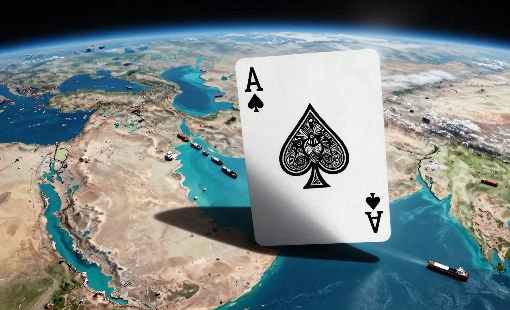
G7 finance ministers and some central bankers met recently in Washington, DC, to discuss a number of global challenges, by far the greatest concern was the closure of the Strait of Hormuz.
The Trump administration’s response to concerns about the energy shock and stagflation was predictable: the war will be over soon, and the gain is worth the pain. However, many remain sceptical and are concerned that the risk in terms of world energy will have to be managed for years, even when the conflict is over.
It has only been during the recent two-week ceasefire, the full scale of the damage to oil and gas infrastructure in the energy-rich Gulf region has started to become clear. Some energy analysts are suggesting that even with a durable ceasefire and the re-opening of the Strait of Hormuz. The oil, gas and fertiliser markets may not return to normal for at least six months.
Saudi Arabia, the world’s largest oil exporter, has said that it has suffered significant damage to its production capacity. Qatar, one of the world’s largest liquified natural gas producers, has lost almost a fifth of its output. Both of Abu Dhabi’s largest oil and gas refineries have been damaged by Iranian drone attacks. Meanwhile, Kuwait’s two oil refineries have suffered serious damage from multiple strikes, while Bahrain declared force majeure at its Sitra refinery. The re-opening of the Strait of Hormuz would be a major relief for markets, finance ministers and consumers and would remove the threat of a further energy shocks. Although it looks like it will take a considerable time to bring damaged energy infrastructure back on-line.
Trump’s Gulf War may also prolong the conflict in Ukraine. President Zelensky has condemned a US decision to extend the period during which Russia is allowed to sell oil despite Western sanctions. Trump is desperate to ease the energy crunch, but an oil revenue boost for Putin is not helpful for Ukraine or European NATO members.
Getting the Strait of Hormuz back open and keeping it open is a priority. Seeing the stranglehold this is causing to World trade, disrupting the free passage to shipping appears to be Iran’s ‘trump card’ in negotiations.
What have we been watching?
Two months into the Iran strikes, a fragile ceasefire holds as Iran’s fresh proposal to reopen the Strait and end the war — which notably defers nuclear talks — has lifted market sentiment to start the week, though with Trump having rejected prior terms as insufficient and Iranian President Pezeshkian ruling out negotiations under duress, resolution remains deeply uncertain.
The recent trend of the US and Iran repeatedly failing to send delegations to Pakistan continues, and to date peace talks have no agreed framework — a far worse situation than markets expected when the conflict began. Despite this, markets are hitting all-time highs, with the iShares Semiconductor ETF (SOXX) up 53% year-to-date across 18 consecutive up days — the longest winning streak in the index’s history — with April on course for its best month since the peak of the dot-com bubble during February 2000.
We’re deep into the US Q1 earnings season — hyperscaler capex is still accelerating, with Microsoft, Meta, Amazon, and Google all yet to report. AI, a genuine structural tailwind, and the risk isn’t that AI is overhyped; it’s that the market is pricing cyclical businesses as though the cycle has been abolished. Cyclicals characteristically look cheap near cycle peaks — that’s part of what makes them dangerous — and serious supply chain disruptions from the Iranian conflict are yet to be felt.

The UK economic data read well amid a challenging outlook, with unemployment coming in lower than expected and GDP beating forecasts, with broad-based gains across services and production — partly aided by car production recovering from last year’s cyber incident. Retail sales were meaningfully stronger than expected, with a strong Easter providing additional support. Inflation came in at 3.3%, up from 3% in February.

The US Q1 earnings season has shown the real economy is booming, driven so far by massive hyperscale capex and banks benefiting from the extreme market volatility.
While much of the S&P 500 is rallying, it is interesting to note that businesses like ServiceNow, an IT systems business and poster child for AI monetisation, saw its stock fall 15% on a beat and raise. Is the market starting to ask a harder question: where does AI actually show up in the numbers?
US retail sales grew 1.7% for the period, ahead of expectations, but primarily due to increased gas prices.

China’s imports continued to surge, up 28% year-on-year to a record $270bn, far exceeding market expectations, as China continues to intensify efforts to secure resources despite supply chain disruptions and elevated costs linked to the Iran conflict.

Today Brent crude sits at $108, up nearly 14% on the week amid stalled Iranian negotiations. On top of this, while peace negotiations with Russia were starting to look positive, Russia has reversed course and is now blocking oil from Kazakhstan that flows through the Druzhba pipeline and supplies almost all of Berlin’s petrol and heating fuel. Subsequently, the price of German gas is up 14% on the week and a painful 55% year-to-date.
Finally, we all know that markets move instantaneously on Trump’s Truth Social posts and that traders have been betting millions of dollars just before he makes major announcements. However, it was interesting to note an analysis by the BBC of some of Trump’s recent posts and moves in oil prices called ‘The insider trading suspicions looming over Trump’s presidency’. None of the US financial authorities contacted by the BBC acknowledged any of the allegations of insider trading.

1 The Square,
Temple Quay,
Bristol BS1 6DG
Tel: 0117 203 3460
Email: info @ alpha-pm.co.uk

Full version
© Alpha Portfolio Management 2026. All Rights Reserved
Site by Lookhappy