Alpha Portfolio Service Brochure
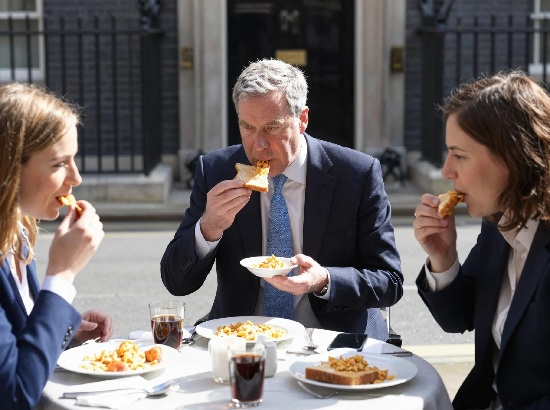
Is Special K toast?
The recent local election results confirmed that Nigel Farage’s Reform UK party is currently the most popular in the UK and would likely win a general election were it held today.
If Reform UK retains its current lead until 2029, it would end Britain’s post-WWII traditional two-party system of government. The UK’s first past-the-post electoral system gives only the first-placed party in each constituency a seat. Historically, it has made it difficult for new parties to gain influence in parliament and led to Labour-Conservative dominance. Now that Reform UK has overtaken the traditional main parties, it stands to benefit. In 2024, the Labour Party secured 62% of the seats with just 34% of the popular vote. Reform’s current 27% share of the vote could also secure a majority of seats, although possible tactical voting against the party might limit it to a minority government.
Meanwhile, PM Sir Keir Starmer, or ‘Special K’, as he claims to have been called all of his life, is facing a leadership challenge following the disastrous local election results. The challenge will come from Wes Streeting and Andy Burnham, the latter subject to the result of the Makerfield by-election on the 18th of June. Already old Labour wounds are being reopened with Wes Streeting and Andy Burnham involved in a debate about reversing Brexit!
Globally, bond yields are rising due to fears about ‘stagflation’ due to Trump’s Gulf War. This together with market fears about a UK government shift to the left has driven the 10-year UK Treasury yield to its highest level since 2008 while sterling has weakened.
Liz Truss’s infamous mini-budget in 2022 showed that underfunded tax cuts risk capital flight. This is a risk for both Reform UK and Labour. Markets are nervous about the prospect of left-wing Andy Burnham as PM due to his comment last September when he said, ‘We’ve got to get beyond this thing of being in hock to the bond market.’ At the time, this caused gilt yields to spike. Reform UK performed very strongly in Makerfield in the local elections, and much might rest on whether the Green Party contest strongly, splitting the left-wing vote.
Higher government borrowing costs and inflationary pressures from weaker sterling, in addition to the damage from Trump’s Gulf War as well as the uncertainty from the leadership race, are all unhelpful for the UK economy.
It is going to be a challenge whoever is leading our country. Looking out to 2029, will Britain’s voting system and new multi-party mayhem create a hung parliament? This would be far from ideal for voters or investors given the challenges, both economic and geopolitical, that the UK faces. Before this, however, UK businesses and investors must navigate yet another leadership contest with all the uncertainty that this entails.
What have we been watching?
A strong week for US equities again, helped by the AI investment boom but one which ended with a global bond sell-off over fears about a stagflationary shock from Trump’s Gulf War. The trigger appeared to be the ‘summit lite’ meeting between Presidents Trump and Xi Jinping. Despite market hopes, China offered no assistance in reopening the Strait of Hormuz. Meanwhile, the US position on Taiwan, semiconductor controls, rare earth minerals and AI co-operation remained unchanged. All that could be said of the meeting was that there was no further escalation in the trade war between the US and China!
The Gulf War is now 80 days old, with no obvious end in sight. The current ceasefire has lasted 41 days, suggesting that the US would prefer to avoid a further attack on Iran given the political and economic consequences. However, the fragile nature of the ceasefire was highlighted over the weekend when a drone attack caused a fire at an electrical generator at a UAE nuclear facility.
Over the weekend, Trump posted on Truth Social: ‘For Iran, the clock is ticking, and they better get moving, FAST, or there won’t be anything left of them. TIME IS OF THE ESSENCE!’ Trump and Israel’s Benjamin Netanyahu also spoke to determine the next stage of the conflict.
The ‘stagflationary’ shock from a prolonged conflict pushed global bond yields higher. The US 10-year Treasury yield has climbed to over 4.6%, its highest level in the last year. In Japan, the 10-year JGB yield has risen to 2.75%, a level last seen in 1997. In the UK, the 10 year Treasury yield has climbed to 5.19%, the highest level since 2008, albeit exacerbated by the Labour government leadership challenge.

In the UK, encouraging first-quarter economic growth data was overshadowed by yet more political turmoil which, together with Trump’s Gulf War, is likely to adversely impact the second quarter.

In the US, inflation fears were exacerbated by strong CPI and PPI data, which have led to mounting anticipation about an interest rate hike by the Federal Reserve (Fed). The probability of a 0.25% Fed rate hike in December has now risen to 62%.

In Japan, government bond yields climbed in line with global bonds but also reflected comments from PM Takaichi. She is reported to have asked Japan’s finance minister ‘to consider ways of funding, including compiling a supplementary budget.’

Brent oil edged above $110 this morning given the latest developments in the Gulf and Trump’s latest comments. Oil futures are also pricing in a more protracted conflict, with 6-month Brent futures now at the highest level since the Gulf War began.
Finally, it wasn’t already challenging for tour holiday operators due to the Gulf War. Now, some hotels are cracking down on people reserving sun loungers with towels after a judge in a district court in Hanover awarded a German family an £850 refund after claiming they spent 20 minutes every morning trying to find a sun lounger. Given jet fuel availability, consumer caution, an increase in UK staycations and now ‘sunbed wars,’ it’s enough to make tour operators throw in the towel!

1 The Square,
Temple Quay,
Bristol BS1 6DG
Tel: 0117 203 3460
Email: info @ alpha-pm.co.uk

Full version
© Alpha Portfolio Management 2026. All Rights Reserved
Site by Lookhappy