Alpha Portfolio Service Brochure
US & Iran – Not there yet
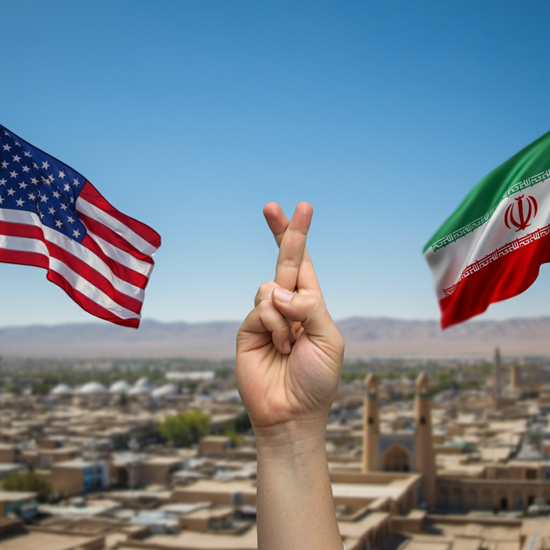
The much-anticipated US peace deal with Iran still seems very elusive. ‘Very close’ to a deal but ‘not there yet’, according to US Vice-President JD Vance.
Over the weekend, the US said it struck Iranian military sites while Tehran responded by targeting an American base. Meanwhile, Israel has expanded its ground offensive in Lebanon against the Iranian-backed Hezbollah. Some limited shipping does appear to be getting through the Strait of Hormuz with US assistance, and the Brent oil price remains below recent highs at around $93. Markets are currently not pricing in a prolonged conflict with hopes of a further 60-day ceasefire extension.
However, we are mindful of the risk that still exists of a serious energy crunch if the Strait of Hormuz does not fully reopen soon – which could drive oil prices materially higher. This could create either stagflation or, in the worst-case scenario of prolonged higher prices, another global recession.
Since the beginning of the conflict, the world has been living beyond its means. When the US/Israeli attack on Iran began, the International Energy Agency (IEA) announced the release of a record 400 million barrels of oil from the global strategic oil reserve. It was assumed, at the time, that the Strait of Hormuz would re-open within weeks.
The IEA estimates that between March and June that global oil consumption could be running at 6 million barrels a day in excess of production. More than 2 million barrels a day are being released from the strategic oil reserve, but this is due to end in July. Some analysts are warning that oil inventories among OECD countries could approach operational stress levels by the end of June. The tightest markets are not just in crude oil but in jet fuel, diesel and fertilisers. Furthermore, demand for air conditioning and holiday travel at the start of the northern hemisphere’s summer will exacerbate the situation.
Unless Trump can reach a peace deal with Iran and reopen the Strait of Hormuz quickly, then the risk of a prolonged energy crunch remains.
UK businesses and households are already feeling the pain from higher petrol and diesel prices. Markets are hopeful of a peace deal that allows the Strait of Hormuz to fully reopen so that a prolonged energy shock is avoided. The trouble is that neither side trusts the other and the two main stumbling blocks remain the control of the Strait of Hormuz and Iran’s nuclear programme.
We are not facing a prolonged energy shock – yet – but as Trump keeps telling Iran, ‘Time is ticking.’ He is still deciding on whether the current negotiations between the two nations satisfy his demands.
What have we been watching?
Another good week for global equities buoyed by hopes of a US-Iran peace deal which would pave the way for the reopening of the Strait of Hormuz. Brent oil fell by over 11% over the week to $92, while the six-month Brent future contract price also moved lower to $84. With stagflation fears easing, US equities recorded their ninth consecutive weekly gain with the S&P 500 index hitting a record high. The US market was also propelled higher by heavyweight AI chip stocks within the NASDAQ. Micron Technology became the latest semiconductor manufacturer to cross the $1 trillion market capitalisation barrier. The equity rally extended globally, with Japanese equities enjoying a strong week, although gains in European markets were more modest.
The decline in oil prices meant that fears about inflation eased. This, in turn, led markets to dial back their expectations for interest rate increases by central banks. The chances of a 0.25% interest rate hike by the US Federal Reserve (Fed) by December fell from 95% the previous week to 57%. Likewise, the chances of interest rate hikes by the European Central Bank (ECB) were also lowered although a 0.25% increase is still expected in June. Meanwhile, Bank of England (BoE) governor Andrew Bailey said that the UK can tolerate inflation that is temporarily above target and that a gradual softening in the labour market meant that inflation expectations were not coming through in wages. However, he did warn that the longer the Strait of Hormuz remains closed, the higher the likelihood that the BoE raises UK interest rates. Nonetheless, globally, lower interest rate hike expectations translated into a good week for fixed-interest investors also as Treasury yields edged lower.

In the US, the latest PCE inflation print was softer than expected, further easing concerns around the need for interest rate hikes. Headline PCE was up only 0.4% in April, whilst ‘core’ PCE was up only 0.2%. Fed officials did not sound in any rush to increase US interest rates either. Further support came from slightly softer economic data. The weekly initial jobless claims were higher than expected, while the latest GDP economic growth estimate for the first quarter proved softer than the previous estimate, running at an annualised 1.6% compared with 2% previously.

China’s official manufacturing and non-manufacturing PMI activity indicator for June came in at 50.0, in line with expectations

Brent oil is 3% higher this morning at almost $94 given the tit-for-tat US and Iranian attacks over the weekend.
Finally, hammered? London taxpayers may have to pay an extra £2.5m following West Ham’s relegation from the Premier League due to the club’s lease agreement for London Stadium. No wonder the Mayor of London, Sadiq Khan, was urging Londoners who don’t support Spurs to cheer on West Ham at the end of the season. Desperate times call for desperate measures!

1 The Square,
Temple Quay,
Bristol BS1 6DG
Tel: 0117 203 3460
Email: info @ alpha-pm.co.uk

Full version
© Alpha Portfolio Management 2026. All Rights Reserved
Site by Lookhappy