Alpha Portfolio Service Brochure
Moonshot AI
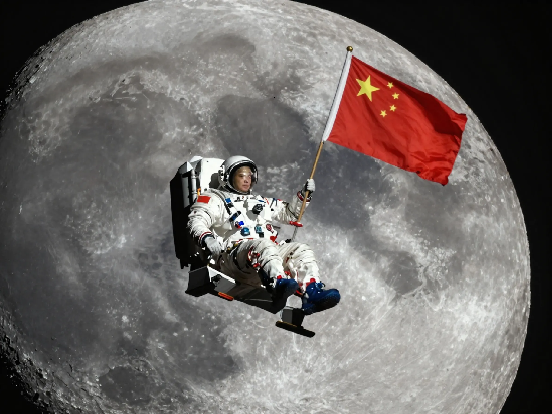
In Chinese, Moonshot AI translates to ‘Dark Side of the Moon’, and the company is one of China’s six AI ‘tigers’.
Less than 18 months ago in Alpha Bites’ DeepSeek-AI’s Sputnik moment, we highlighted the shock for America’s AI (artificial intelligence) industry dominance, which was being challenged by China’s DeepSeek-R1.
Now, America’s AI industry has received a further ‘Sputnik’ shock as Chinese AI start-up Moonshot AI has released a large language model with capabilities approaching the likes of US AI pioneer Anthropic.
Chinese AI disruptors are gaining ground in the US. Their AI models appear to be cheaper, open and intelligent.
Chinese AI companies such as DeepSeek and Moonshot are pricing their AI models significantly cheaper yet with performance approaches that of higher-end systems, implying a materially lower cost-to-intelligence ratio. Furthermore, the Chinese AI models are being increasingly released as open-weight systems, allowing developers and enterprises to download, modify and run them locally, whereas US AI companies have largely pursued closed, proprietary models. Moonshot’s K2.6 AI model is reported to be about a third of the cost of Anthropic’s Opus 4.8 model.
Meanwhile, Anthropic has accused the Chinese AI companies of ‘industrial distillation attacks’ on its models whereby Chinese AI labs are training smaller AI models on the outputs of its more advanced systems.
The Moonshot news comes as markets have grown increasingly concerned by the vast sums that some US tech businesses are investing in AI datacentres and AI model development – but without proven returns on capital. The risk is that the new Chinese AI models erode the scarcity premium embedded in proprietary models, accelerating a shift towards commoditisation, leading to tighter profit margins but faster global adoption as open-weight systems lower barriers to entry.
The importance of the Moonshot news should not be underestimated and is a fascinating development to watch. It will no doubt be causing a few sleepless nights for US AI tech owners and investors!
What have we been watching?
Brent oil surged above $100 as fighting in the Gulf escalated into the Red Sea and government bond yields rose on inflationary fears. Fortunately, global equities remained resilient, helped by hopes of rekindled US/Iran peace talks, US earnings, a modest recovery in US AI stocks and UK takeovers. President Trump also announced a new series of global trade tariffs!
After 13 consecutive days and nights of US and Iran tit-for-tat attacks, the US and Iran appear to be holding fire. Trump’s UN envoy said the president was ‘giving talks some space’ while Iran said it had halted retaliatory attacks against the US and its allies in the Middle East. Over the weekend Omani-mediated talks focused on navigation through the Strait of Hormuz. However, US ambassador to the UN Mike Waltz said that US forces remain ‘locked and loaded’ and that Trump is simply giving negotiations more space. Meanwhile, Trump has dismissed US media reports that the pause may reflect pressure on US stockpiles of Patriot missile interceptors, other weapons and a debate by the administration about the cost and effectiveness of further strikes. The situation remains fragile with Trump due to meet Israel’s PM this week and Iran warning it could widen the Middle East war if the US resumes attacks.

This morning Brent oil has fallen 6% to under $91 on hopes that the current pause in attacks, while falling short of a formal ceasefire, at least offers a path for further diplomacy. The main risk for markets remains energy security, both gas and oil, and the fact that shipping through the Strait of Hormuz remains severely disrupted.
Fears remain that the conflict could broaden into the Red Sea. The surge in oil and gas prices last week followed Iran-backed Yemen Houthi attacks on Saudi Arabian oil tankers and energy infrastructure in the Red Sea, which prompted retaliatory strikes by the Saudis. Iran will also no doubt be watching Israeli action in Lebanon as well as the increasing disturbances in the West Bank between Palestinians and Israeli settlers.
While energy prices have fallen this morning, last week’s escalation in attacks in the Middle East saw global stagflation fears resurface once again. Government bond yields move higher on fears that the world could be facing a prolonged inflation shock. This led markets to expect central banks to have to hike interest rates more aggressively. Indeed, market expectations for an interest rate increase by the US Federal Reserve (Fed) moved up from 14% to 38% last week. As a result, there were some big milestones for government bond yields. For example, the US 30-year Treasury real yield, which is adjusted for inflation, hit a post-2008 high of just under 3%. (The 10-year US Treasury yield is trading above 5%). The German 10-year bond yield, at one point, hit a post-2011 high of 3.2%.

In the US, Trump announced a new series of global trade tariffs to replace the temporary six-month ones that expired last week. The new tariffs range between 10%-12.5% and are broadly in line with the previous tariffs. The justification for the new tariffs is that 50 countries are guilty of using forced labour! Another crazy excuse to avoid a legal loophole. Interestingly, some of Trump’s original Liberation Day tariffs are reported to have been refunded with interest at 7%. Some $85bn has been repaid so far, with some estimates suggesting that up to $166bn may need to be repaid. The Liberation Day refunds contributed to a $120bn federal deficit in June compared with a $27bn surplus in the same month last year.
Finally, with more heatwaves predicted, demand for air conditioning is on the increase, but this will require more electricity. However, recent events in France show this may not be as easy as hoped. France derives 70% of its energy from nuclear power, but its ageing nuclear plants rely on water cooling. Rising water temperatures in French rivers have forced EDF to take multiple reactors offline. This led to a surge in day-ahead electricity prices and forced some energy-intensive industries to curtail production.

1 The Square,
Temple Quay,
Bristol BS1 6DG
Tel: 0117 203 3460
Email: info @ alpha-pm.co.uk

Full version
© Alpha Portfolio Management 2026. All Rights Reserved
Site by Lookhappy