Alpha Portfolio Service Brochure
Middle East Nuclear Powder Keg
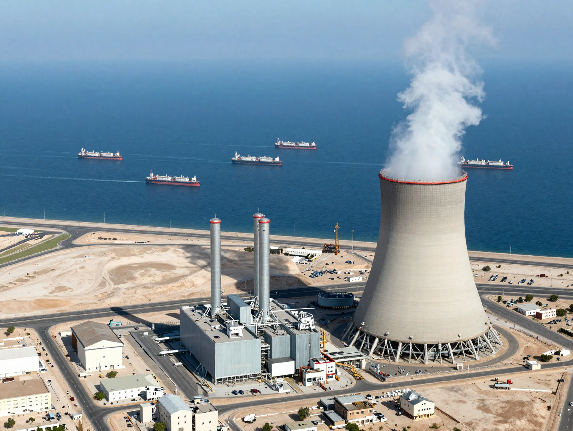
The Trump administration recently signed a landmark nuclear agreement with Saudi Arabia, reversing a years-long stance towards a key American ally in the Middle East. Labelled a ‘peaceful nuclear co-operation agreement’ this sits alongside a ‘bilateral safeguards agreement.’
However, has it kicked off a Middle East nuclear arms race?
It comes in the wake of joint American and Israeli attacks on Iran’s nuclear facilities and Trump’s insistence that Iran can never develop a nuclear capability. This remains one of the many stumbling blocks as the US and Iran seek to end the current conflict in the Gulf.
Signing a nuclear pact in the Middle East will no doubt further raise tensions in a volatile region. Since 2018, Saudi Arabia has demanded that it be allowed to develop nuclear weapons if Iran is allowed to. The details of the nuclear agreement have not been disclosed but are believed not to include strict enforcement measures to block Saudi Arabia from developing a military nuclear programme in the future.
So why a deal now?
The deal would seem to send a signal that the US wants to keep regional allies ‘in the fold’ even if it means angering Israel in the process, as China seeks greater influence in the region. Iran has supported the Yemen-based Houthi rebels, which have attacked Saudi Arabian oil tankers and infrastructure in the Red Sea as it seeks to broaden the conflict in the region. Saudi Arabia has undertaken retaliatory attacks on the Houthi rebels as well as against Iranian proxies in Iraq, so it is another key ally for Trump in the region.
It will take a decade, if not longer, for Saudi Arabia to build nuclear power plants, but the agreement lays the foundations – one day, for a military nuclear capability.
Trump has not only reversed America’s years-long stance towards the Middle East, but he may also have started a nuclear arms race. As if the Middle East was not already dangerous enough!
What have we been watching?
Government bond yields are rising on renewed global stagflation fears due to events in the Middle East, with long-dated yields reaching multi-year highs. Meanwhile, rising concerns about global warming and drought contributed to a further rise in agricultural prices, with wheat climbing by 10% by the end of the month.
Despite this, it was another good week for global equities, although AI companies saw continued volatility. Markets also continued to be dominated by the performance of the mega-caps, a topic we recently covered in Alpha Bites: The rise and rise of mega-cap US technology stocks. For example, last week, the US ‘Mag 7’ jumped by over 4%, as Microsoft and Amazon soared in value by over 21% and 17% respectively, while Apple and Meta fell by 7% and 6%.
Over the weekend, President Trump said he had cancelled the potentially largest American attack on Iran since World War II, following appeals from Gulf states, particularly Saudi Arabia, and announced that fresh US-Iran talks would begin today. At the same time, Iran indicated that negotiations with Oman over arrangements relating to the passage of shipping through the Strait of Hormuz are in their final stages. Hopes of a diplomatic off-ramp to the conflict have seen Brent oil fall this morning by 5% to $83. We have been here numerous times in the past few months, but will a lasting ceasefire be forthcoming this time and will the Strait of Hormuz reopen? Control of the Strait and Iran’s nuclear programme remain key stumbling blocks to any deal.
Some of the recent volatility in AI stocks was partly attributed to the unwinding of a hedge fund, ‘Situational Awareness’, which was reported to be 4-5x leveraged and had taken the wrong view. The value of its funds under management was said to have fallen from $45bn to $10bn over the month. Ouch! Fund manager Citadel was reported to have bought some of its assets at a discount.
The outcome of events in the Middle East remains vital for the global economy, but particularly the UK. Over the weekend, the EY Club warned that the UK risks sliding into recession in 2027 if the Strait of Hormuz remains closed to shipping while inflation could rise to 6.4%. This comes as the UK farming industry warns the decline in crop yields due to drought and heat could increase wholesale prices for vegetables. Last week, the Bank of England (BoE) kept UK interest rates on hold, and the decision was accompanied by rhetoric that it was not edging towards an interest rate hike. The chances of a UK interest rate increase in September have currently fallen from 60% to 30%. The UK 10-year gilt yield remained just above 5%.

The European Central Bank (ECB) also kept interest rates on hold but signalled that an increase in September was probable. The German 10-year bund yield climbed to a post-2011 high of 3.2% following the ECB meeting.

In the US, the Federal Reserve (Fed) also kept interest rates on hold, but new Fed Chair Kevin Warsh offered little guidance behind this decision. Markets dialled back expectations slightly for a US interest rate increase by the end of 2026. However, concerns about events in the Middle East saw the US 10-year Treasury yield climb above 4.7%.
Co-ordinated intervention by the US and Japanese authorities saw the Japanese yen rally strongly, with its biggest weekly gain against the US dollar in almost two years. This followed comments from US Treasury Secretary Steve Bessent, who said that the yen seemed ‘very undervalued’ and reported that the Federal Reserve had undertaken a rate check on the yen against the euro. Meanwhile, the Bank of Japan left interest rates unchanged at 1% but raised its inflation guidance and indicated further discussions on interest rate policy will be taken in September.
Finally, a glut of power from the UK’s wind farms has added nearly £1bn to energy bills according to researchers. Compensation is paid to wind farm operators for unsold power generated. The problem seems to stem from the construction of wind farms in remote locations in Scotland with inadequate grid connections. Six terawatts of power are estimated to have been wasted in the first half of 2026 alone. Energy bills are a hot potato and a key element in the cost-of-living crisis, so will these compensation payments prove to be an embarrassment for our new PM?

1 The Square,
Temple Quay,
Bristol BS1 6DG
Tel: 0117 203 3460
Email: info @ alpha-pm.co.uk

Full version
© Alpha Portfolio Management 2026. All Rights Reserved
Site by Lookhappy