Alpha Portfolio Service Brochure
UK PLC – Year of the Bear Hug
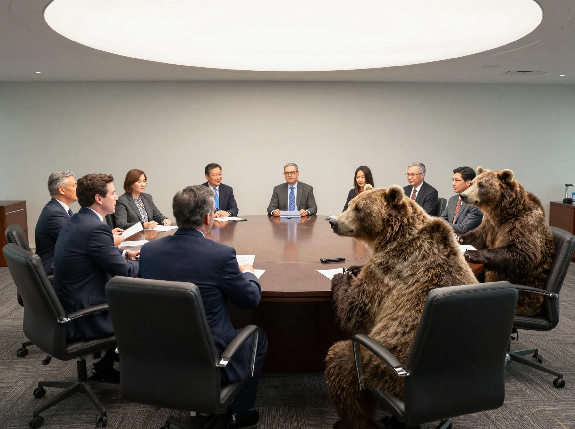
Despite an air of domestic political and economic gloom, foreign buyers are hoovering up UK quoted businesses at an alarming rate.
In recent weeks, amongst bigger names, Segro, EasyJet, Intertek, Beazley, Rotork, MITIE, Bodycote and DCC have all received bid approaches. This follows the US takeover of Schroders earlier this year.
While, for shareholders, a bid approach is usually a welcome development, for long-term investors, it can also leave a challenge. Can you find a replacement investment of equal quality? Unfortunately, the scale of UK takeovers is shrinking the size and importance of the UK stock market and sadly the hopper is not being re-filled with comparable size new issues.
Where foreign companies are buying UK PLCs, the bid premiums have tended to be very significant, as they are able to derive economies of scale. For example, Rotork received an initial unsolicited bid from Swiss company ABB at 430p, before three further proposals leading to a final offer of 506p – a premium of 70% to the pre-offer share price!
However, some of the current bidders are private equity firms and bids have tended to be opportunistic ‘bear hug’ offers. These are typically at a significant but less generous premium to the share price, which seeks to persuade the board of a target company into recommending acceptance to its shareholders. UK companies have received £44bn of so-called ‘bear hug’ unsolicited offers so far in 2026.
The Stock Exchange’s junior market – AIM – has an even greater challenge partly due to Rachel Reeves’ earlier budget inheritance tax rule change. From a peak of 1,700 companies in 2007, the number of AIM quoted companies has recently fallen to below 600. Unfortunately, besides takeovers, the bigger AIM companies have tended to move up to a full listing. The London Stock Exchange is now attempting to address the decline by streamlining AIM rules to reduce costs and make capital-raising easier.
The London Stock Exchange also faces competition for fund raising from the venture capital sector, which is estimated to have raised $92bn in the last ten years, almost five times that of the previous decade! This allows companies to stay private and is not a UK only phenomenon. According to the Economist, the number of publicly listed US companies peaked at 8,000 in 1996 but stood at around 3,900 last year.
Another reason the London stock market has shrunk is that the UK has failed to attract mega-cap AI listings. However, this might not be a bad thing were the AI bubble ever to really burst as UK PLC, with its typically lower valuations, might be a safer port in a storm.
What have we been watching?
Hopes that the Strait of Hormuz would re-open pushed energy prices lower helping propel European and US equities to fresh highs with the latter also helped by a re-bound in AI companies after a difficult July. Soft US jobs data also saw markets dial back prospects of a US interest rate increase.
However, over the weekend, optimism has waned about an agreement to re-open the Strait of Hormuz and Brent oil has risen modestly to $84.
Last week, markets were more hopeful of de-escalation in Middle East tensions as negotiations between Iran and Oman progressed over the Strait of Hormuz. However, optimism faded as details of a potential agreement raised questions over whether the US would accept the deal and just how free-flowing shipping through the Strait would be. Internal divisions within Iran also appear to be complicating efforts to reach a final agreement. The appointment of former Revolutionary Guard commander Moshen Rezaee to head the Supreme National Security Council has reinforced hard-line influence at the centre of decision-making. A deal to re-open the Strait of Hormuz looks unlikely in the short-term after Iran added six additional conditions to the Iran-Oman agreement that were inevitably unacceptable to the US.
Media reports suggest Iran continues to tie any lasting agreement over the Strait of Hormuz to wider demands on the US, including sanctions relief, compensation for war damage and security guarantees. President Trump said, ‘we are now low keying it’ and not rushing to make a deal or resume military action, preferring instead to continue economic pressure on the regime. Meanwhile, Iran was reported to have attacked an oil tanker attempting to use the Omani shipping route.

US headline payrolls fell unexpectedly in July, leading investors to dial back prospects of an interest rate hike by the Federal Reserve (Fed). The chances of a Fed rate hike in September fell from 72% to 44%. Meanwhile, President Trump is under mounting pressure over the Middle East, but internal opposition appears to be growing ahead of the midterm elections. Some 25 Democrat-led states are suing the Trump administration over his latest 10%-12.5% tariffs. Meanwhile, the Trump administration is reported to have repaid $100bn of the $165bn Liberation Day tariffs collected!

The Japanese yen remained in focus although it was only marginally weaker. Stronger Japanese wage growth and more ‘hawkish’ signals from the Bank of Japan reinforced expectations for additional policy tightening.
Finally, petrol station owners just can’t win. Already taking flak from drivers for profiteering from the war in the Gulf, they are now the victims of fraud. UK drivers are reported to have stolen almost £200,000 of fuel on average every day since the outbreak of the war in Iran. Some people are simply driving off without paying!

1 The Square,
Temple Quay,
Bristol BS1 6DG
Tel: 0117 203 3460
Email: info @ alpha-pm.co.uk

Full version
© Alpha Portfolio Management 2026. All Rights Reserved
Site by Lookhappy