Alpha Portfolio Service Brochure
Is all well in Germany?
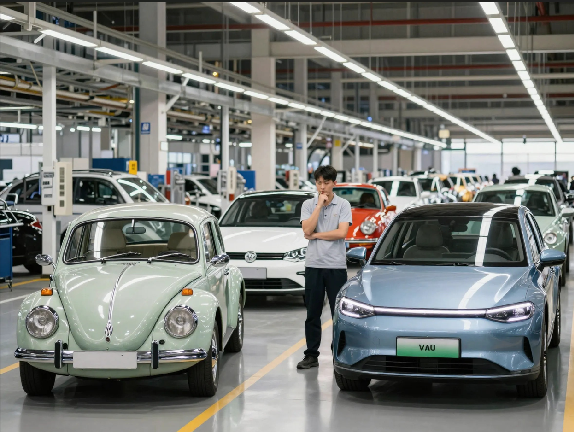
Germany’s export-orientated economy is now in its seventh year of economic stagnation. This is due to a combination of COVID, high energy costs due to the war in Ukraine, US tariffs and Chinese competition in key industrial markets.
The answer to these challenges by the German government is a €500bn stimulus programme – the Special Fund for Infrastructure and Climate Neutrality – to boost the economy over a 12-year period. The programme is designed to bypass the country’s constitutional “debt brake” or Schuldenbremse.
The German car industry has been the backbone of Europe’s largest economy and is facing significant headwinds. The automotive sector is one of the largest employers in the country and has been significantly impacted by Chinese competition. Following rapid growth, Chinese car brands now account for more than 10% of vehicles sold across Europe.
As a result, Germany’s carmakers are embarking upon their most extensive restructuring ever to combat the scale of the growing pressure from Chinese EV imports. BMW is to incur €1bn in restructuring costs, which could see up to 10,000 job losses and car production cut by 15%. Volkswagen is reported to be considering as many as 100,000 job losses from its 625,000 workforce over the coming years. The knock-on effect to the employees in the supply chains of these car manufacturers is still unclear.
The uncomfortable truth is that the shift from combustion engine to EV has levelled the playing field. For over a century, Germany’s mastery of the fiendishly complicated combustion engine was its moat. The shift to electric vehicles removed that moat, swapping that engine for a battery, some software and a much simpler drivetrain, resetting the game on terrain where China could compete.
On this new terrain the Chinese haven’t just caught up, they’ve lapped the competition. It’s estimated that a European manufacturer takes 40 to 80 months to bring a new model to market, where Chinese firms manage it in under 24 and the global consultancy McKinsey pegs China’s EV cost advantage at 20-50%, or north of €6,000 on a €30,000 car. Volkswagen’s once-in-90-years redundancy programme, by contrast, aims to save roughly €1,000 per vehicle — which is like fighting a house fire with a well-aimed water pistol…
Pressure on German car manufacturers has been building as they struggle to sell in China and face US tariffs. Chinese cars are gaining market share in Europe at a much faster pace than expected. The restructuring programme underway risks permanently shrinking one of the most important industries in Europe’s largest economy. One hope must be that German automotive workers made redundant can be re-employed in the defence sector, where Germany is ramping up investment given the threat from Putin.
What have we been watching?
Long-term US government bond yields kept climbing last week, then the Treasury caught investors off guard by saying it would at least double its buyback operations for longer-dated Treasuries as US debt reached a monumental $40 trillion — pushing debt-to-GDP to its highest since WW2!
The aim is to prop up demand at the long end and stop yields spiralling higher — borrowing costs that feed through to mortgages, business loans and the government’s own interest bill. It’s a small amount relative to the total stock of Treasuries, but the signal was enough to flatten the curve and pull the 30-year yield down from its post-2007 high of 5.31% on Monday. The relief didn’t last though, as the yield drifted back up to close just shy of its earlier peak.
With no sign of US-Iran talks over the week, Brent crude climbed +6.6% to c.$94/bbl, which reignited inflation fears.
This, in part, contributed to a risk-off tone across the markets, with equities down across the board: S&P 500 -1.43%, STOXX 600 -0.56%, and the Nikkei -3.93%.
Gold hit a 3 month high of c.$4,600, supported by previously described US bond intervention and reignited inflation fears.

US–Canada trade talks collapsed over the weekend. PM Mark Carney said Canada was “walking away from a bad deal” and would match Washington’s tariffs dollar for dollar — 50% tariffs on around $20bn of goods, with retaliation starting September 8. Trump hit back online, and the Canadian dollar fell against every G10 currency this morning.

Unemployment was expected to fall, it remained at 4.9%, while CPI inflation came in higher at 2.9%, as expected. PMIs were healthy and a notch better than analysts had expected.

One bright spot was better than expected flash manufacturing PMI, which came in at 52.8.
Finally, another challenge for new PM Andy Burnham. Against a background of UK drought and wildfires, a decision is looming over the future of the Rosebank oil field and Jackdaw gas projects in the North Sea. Supporters argue that domestic production is better than imports for meeting domestic demand, as it means fewer emissions from shipping gas, better regulation, and taxes and jobs for Britain. Will the war in the Gulf shift government thinking?

1 The Square,
Temple Quay,
Bristol BS1 6DG
Tel: 0117 203 3460
Email: info @ alpha-pm.co.uk

Full version
© Alpha Portfolio Management 2026. All Rights Reserved
Site by Lookhappy