Alpha Portfolio Service Brochure
An energy crisis of our own making?
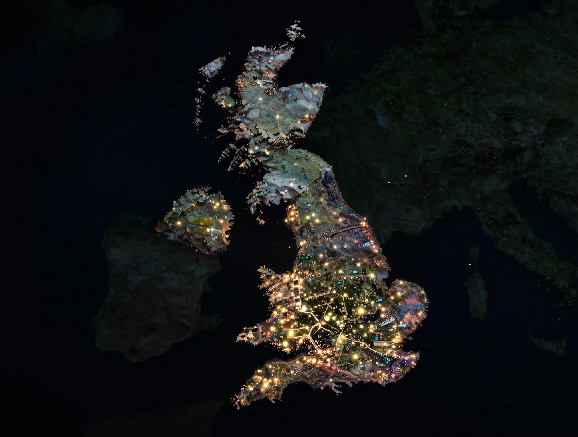
The UK has another new PM and one who faces the same challenges. One of these is energy security and the UK’s shift to greater electrification driven primarily by AI datacentres and EVs, while endeavouring to hit net zero emission targets.
While the UK is developing nuclear, wind and solar renewable energy, it is still reliant upon natural gas. In 2025, natural gas accounted for 35% of total UK energy demand. The UK’s gas supply is currently a mix of domestic production, Norwegian imports via undersea pipelines and LNG (Liquefied Natural Gas) from the US and Qatar. In 2024, the US supplied around 10% of the UK’s LNG requirements, but Wood Mackenzie suggests that this could rise to 60% by 2035. Meanwhile, the UK’s domestic gas production has been steadily declining for decades, with output from the North Sea at its lowest level since the early 1970s and is estimated to cover less than 50% of what we currently consume.
How does the UK make up the energy shortfall?
Events in the Middle East, with the closure of the Strait of Hormuz and disruption in the Red Sea, have seen energy prices soar, exacerbating the UK’s cost-of-living crisis. Both oil and gas prices have soared as supplies have been disrupted. Oil prices remain elevated but Saudi Arabia is increasingly demonstrating that damaged infrastructure does not automatically mean lost oil exports. The physical system is proving more reliant than feared however, adaptation is reducing scarcity rather than restoring normality.
The same cannot be said of LNG, where supply is proving considerably harder than oil adaptation. European gas prices have more than doubled to above €80/MWh. A greater concern is Eurozone storage, which is currently standing around 70% ahead of winter, while Qatari LNG exports remain constrained. Unlike crude oil, LNG cannot be easily re-routed through pipelines, alternative ports or logistical workarounds. While the oil market may be beginning to reflect some supply adaptation, LNG markets may be pricing in the greater scarcity.
To compound domestic issues, Britain’s gas storage is currently at a decade-long low due to the events in the Gulf, just 12 days’ supply. So, let’s hope the mild weather continues for as long as possible!
Given these challenges, reducing the UK’s dependence upon LNG imports should be a priority. The approval of the Rosebank and Jackdaw oil and gas fields in the North Sea rests with new PM Andy Burnham and is proving to be a political hot potato. It remains to be seen whether that hot potato is baked on American LNG, renewables or North Sea gas!
What have we been watching?
Oil prices remain elevated, but US equities edged up last week and the S&P 500 and NASDAQ indices hit another record high, supported by expectations of strong earnings this week. Increasingly, the AI trade is being seen as a hedge against higher interest rates, which have a greater impact on the wider economy and market.
In Europe the closely watched yield spread between German and French government bonds (OAT-Bund spread) narrowed ever so slightly, easing some concerns, although fiscal and political uncertainty remains.
Markets continue to navigate the complex geopolitical events in the Middle East and Ukraine/Russia. Last week, Brent oil climbed over 2% to just under $105. This morning Brent oil has eased slightly to $104 on Trump’s claims over the weekend of an ‘energy ceasefire’ between Russia and Ukraine. However, reports of a Russian attack on a Ukrainian power plant have cast doubt on the prospect of an agreement. Trump also announced that Putin had agreed to release 300,000 tonnes of diesel immediately to the US and global marketplace, to be followed by a further 500,000 tonnes in November and 1 million more after that. President Zelensky called the deal a gift to Putin that amounts to ‘an investment in a war that must be ended.’ Reports suggest that the US had threatened to withdraw vital intelligence support to Ukraine if it continued to attack Russian refineries.
Meanwhile, there is the risk of wider regional escalation in the Middle East. A day after 13 people were killed and hundreds injured in a Houthi missile attack on the international airport in the Saudi Arabian capital, Riyadh, a second strike has killed another person. Saudi Arabia has intensified air strikes in Yemen, while Trump has said that the US ‘may’ join strikes against the Houthis after an American was among those killed on Saturday. The escalation comes as Saudi-backed Yemeni government forces counter recent Houthi gains near Bab el-Mandeb, the crucial Red Sea shipping chokepoint. Attacks on Riyadh and fighting around Bab el-Mandeb suggest oil and gas prices are likely to remain elevated, together with shipping costs while there is still continuing disruption to shipping in the Strait of Hormuz.
Iran has denied directing the Houthis and its foreign minister has urged diplomacy with Saudi Arabia, but there is little sign yet of de-escalation. Meanwhile, Trump has said that the US is ‘having productive discussions’ with Iran and that ‘we will not be attacking Iran at any time prior to the midterm election.’ Iran’s foreign minister said that Iran was reviewing a US proposal and would respond in the next few days.

In the UK, the IFS warned of a potential £35bn gap in the public finances by 2029-30 if spending rises in line with inflation and the government proceeds with its target of increasing defence spending to 3% of GDP. The IFS also cautioned that a ‘do-nothing’ budget is not an option, although that appears to be the government’s current approach. Meanwhile, at one point last week, the 10-year UK gilt yield hit a post-2007 high of 5.48% before the OAT-Bund yield narrowed slightly.

European Central Bank (ECB) head, Christine Lagarde was reported to have told Eurozone finance ministers that the ECB has instruments to deal with unwarranted and disorderly market dynamics. This is the first sign of soft verbal intervention in the current European government bond crisis and will no doubt have prompted the market to access what is in the ECB’s toolkit. The slight recovery in French bond yields supported a relief rally across much of Europe, as it eased fears about contagion spreading to other countries. However, fiscal and political concerns remain.
Finally, how the recent volatility in global bond markets has fed through into the UK housing market. The average interest rate on a new five-year fixed mortgage deal recently hit 6% for the first time in three years. Unfortunately, events outside the UK, such as the conflict in the Gulf, are exacerbating the ‘cost-of-living’ crisis.

1 The Square,
Temple Quay,
Bristol BS1 6DG
Tel: 0117 203 3460
Email: info @ alpha-pm.co.uk

Full version
© Alpha Portfolio Management 2026. All Rights Reserved
Site by Lookhappy