Alpha Portfolio Service Brochure
A new ‘Bre-ginning’
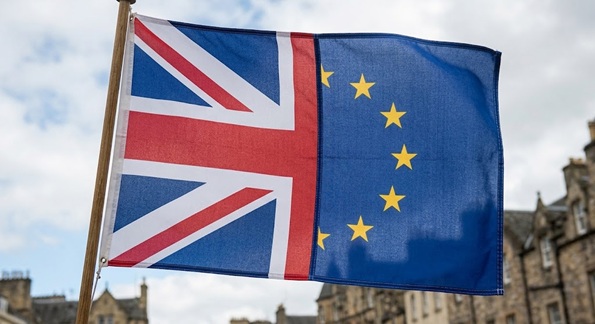
PM Andy Burnham has stated the 2016 Brexit referendum was targeted by Russian ‘state-sponsored interference.’ MI5 chief Sir Ken McCallum has subsequently reaffirmed there was Russian involvement but that ‘Russia did not sway the Brexit vote.’ Russia was accused of interfering in the 2016 US presidential election, so anything is possible, but the PM’s comments have re-ignited the Brexit debate once again.
This follows Andy Burnham’s recent speech to the Labour Party conference in which he warned that the current Brexit settlement was damaging the UK economy and promised a national debate about options for future relations, a ‘Bre-union,’ ahead of a major UK-EU summit in November. His comments have also reignited the hopes of the SNP, whose leader John Swinney has said that the ‘Scottish referendum campaign has already begun.’
Andy Burnham’s comments have been welcomed by many European leaders and pro-EU pressure group, Best for Britain, said fears that the UK re-accession process would be bitter and take a decade were overblown, citing Finland’s completion of its EU joining process in less than three years. To rejoin the EU would require the British government to apply under Article 49 of the EU treaties, triggering a process which London would need to negotiate across 35 different chapters of law. Once agreed, membership would need to be approved by existing members of the EU and then ratified in national parliaments.
Following Andy Burnham’s speech, polling by YouGov found that 52% of Britons would vote to rejoin the EU and 27% would vote to stay out. More than 20% of 2016 ‘Leave’ voters would now vote to rejoin.
Andy Burnham has said that he intends to stick to the current Labour manifesto – for now and cannot fully deliver on his ambitions until 2029, the next scheduled election.
Might we see an earlier UK general election, if Labour moves into a clear lead in the polls?
Could the next general election effectively become a second EU referendum with Labour proposing rejoining against Nigel Farage’s Reform stay out?
What have we been watching?
Yet another sharp sell-off in the semiconductor sector as concerns over the future profitability of AI continued to weigh on technology stocks driven by concerns about US datacentre builder and operator CoreWeave. The weakness in technology helped support broader market performance and more traditional sectors, including the UK market, which has relatively limited exposure to AI capital spending. AI worries also helped to drive a decent rally in government bonds, although concerns remain about France. Inflation concerns are still an issue in Europe as energy prices, both oil and gas, remain elevated.
Brent oil climbed almost 5% last week to $109, although as we write this morning, is off 2.5% at $107. Of equal concern for European economies is the price of natural gas, which last week hit the highest level since 2022, touching over €87.5 per MWh.
Last week saw a sell-off in AI-related assets, with semiconductor chip stocks being particularly hard hit, with the Philly semiconductor index down by more than 11%. This was sparked by results from US datacentre builder and operator CoreWeave, whose shares fell by over 25%.
AI growth concerns helped drive a decent rally in government bonds. The US 10-year Treasury yield edged slightly lower to just above 5%. This was despite a higher-than-expected US core CPI inflation, which increased by 0.3% in September. This saw futures briefly price in a greater-than-50% chance of an interest rate hike by the Federal Reserve (Fed) in October. However, the AI sell off saw markets dial back expectations of an immediate rate hike by the Fed, with futures pricing in only a 17% chance of an increase by the end of the last week.

In the UK, the economy grew by 0.1% in August which was little better than expected albeit lower than the growth seen in July. The all-important services sector flatlined over the month which is a similar trend to that of recent years ahead of the Budget.

In Europe, the closely watched spread between German and French bonds (OAT-Bond spread) came down slightly alongside a wider decline in government bond yields across the continent. However, the rioting across France over the weekend and some other parts of Europe does not bode well. It increasingly appears that Marine Le Pen and the National Rally party could be well positioned for next year’s presidential election, raising questions about the future direction of France’s relationship with the EU. More broadly, the challenge of balancing fiscal discipline with public opposition to austerity measures remains a key issue for France and, increasingly, for other highly indebted governments seeking to bring public spending under control.
Finally, the central bank of the Netherlands recently confirmed it had moved tonnes of the country’s gold out of the USA and to the Bank of England. London is seen as the best choice due to its position as a major trading centre and if you want to buy or sell gold fast in a crisis, London is the place to be, which makes the Bank of England a popular storage location. The Bank is one of the largest custodians of gold in the world and is thought to be sitting on 400,000 gold bars worth £200bn. If only all that gold belonged to the UK!

1 The Square,
Temple Quay,
Bristol BS1 6DG
Tel: 0117 203 3460
Email: info @ alpha-pm.co.uk

Full version
© Alpha Portfolio Management 2026. All Rights Reserved
Site by Lookhappy