Alpha Portfolio Service Brochure
A Super El Niño – are you prepared?
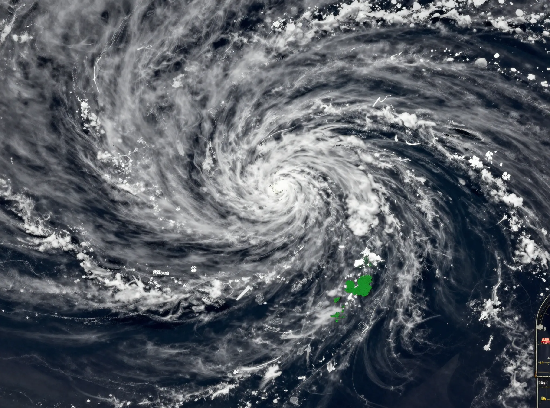
A new phase of the natural weather phenomenon El Niño – the strongest in decades, could begin very soon, the UN has warned. This will drive more extreme weather around much of the globe and boost temperatures on a planet already under strain from climate change.
An El Niño forms when a switch in wind patterns allows warmer waters to spread across the tropical Pacific Ocean. While an El Niño weather event has been expected, scientists believe it could be unusually powerful, even a record event or a ‘super’ El Niño. It’s predicted to have an adverse effect on UK weather in early 2027.
El Niño will have a global impact but typically fuels hot, dry weather in parts of South America, Southeast Asia and Australia, raising the chances of droughts and wildfires. It can weaken the Indian monsoon and bring drier conditions to parts of Africa. Meanwhile, heavier rainfall can increase the risk of flooding in the southern US.
Why should we be concerned?
This El Niño weather event is expected to exacerbate the global food supply situation and drive the price of some key commodities, such as soy, higher. The UK is reliant on imports for two-fifths of its food supply, while English farmers have faced three of the worst harvests in the past five years. With soy harvests expected to be lower, prices for animal feed will go up, with costs pushed on to consumers.
Global food production is already at risk due to Trump’s Gulf War. Besides the spike in energy prices, the Middle East is a major producer of fertilisers, with 35% of the global exports of urea, a widely used nitrogen fertiliser, passing through the Strait of Hormuz. The UK imports about 60% of its fertilisers. The impending peace deal between the US and Iran should alleviate the fertiliser issue, although, it will take 30 days to clear mines from the Strait of Hormuz and potentially years to rebuild damaged infrastructure in the region.
While a peace deal and reopening of the Strait of Hormuz is a very welcome headline news, a possible Super El Niño weather event will not be for the government facing an ongoing cost-of-living crisis or the Bank of England monitoring the inflation outlook.
What have we been watching?
Peace in our time! (with apologies to British PM Neville Chamberlain)
After 107 days of conflict and a seemingly endless number of false dawns, it looks as if we finally have a peace deal between the US and Iran which will lead to the reopening of the Strait of Hormuz. As we write this morning, risk assets have moved higher, Brent oil has fallen 4% to $83, while the two-year UK gilt yield has dropped to a two-month low of 4.77%.
The peace deal is to be signed on Friday in Switzerland. According to Iranian state media, the agreement includes a phased lifting of US sanctions on Iranian oil exports, the unfreezing of $12bn in overseas assets, and a commitment to reopen the Strait of Hormuz within 30 days, after mine clearing. The US will also end its naval blockade of Iranian ports. The deal also sets out a 60-day negotiating window during which Iran’s nuclear programme will be discussed. Tehran is expected to commit to maintain its current status and not pursue nuclear weapons.
While the peace deal is good news for markets and there is relief all around this morning, is the Middle East really any safer following the US and Israeli strike on Iran? Trump will be relieved given the US midterm elections are looming on the horizon. However, there are tough conversations ahead over the next 60 days and will the peace deal be sustainable? For example, the US Senate will need to approve any extensive sanction relief for Iran. More significantly, what about Israel and Hezbollah in Lebanon? If either were to undertake further strikes against one another, would Iran attempt to close the Strait of Hormuz again?

In the US, SpaceX’s market debut was a monumental event, marking the largest IPO (Initial Public Offering) ever completed and the company’s market value has since surpassed $2 trillion. (please see last week’s Alpha Bites for the ramifications of the sheer scale of this IPO). However, there was uncertainty for US tech companies and assumptions about the breakneck speed of AI adoption. On Friday, the US government issued a temporary export control directive forcing Anthropic to restrict access to its most advanced AI models due to undefined security concerns. These AI models had been released to great acclaim last week to US nationals. As it is operationally difficult to separate users by nationality, Anthropic opted to suspend access to these AI models on a global basis. All eyes now on the US government and Anthropic to see what they agree on as the next step!
The week ahead will see a number of key central banks making interest rate decisions. The US-Iran peace deal should help ease fears about a stagflationary shock to the global economy. For example, at the start of last week, markets were fully pricing in the prospect of the US Federal Reserve (Fed) increasing interest rates by December, but this has now lowered considerably. Elsewhere, the Bank of England is expected to keep interest rates on hold, while the Bank of Japan is expected to announce a further rate increase as part of its gradual normalisation process.

The peace deal will also be welcomed by the UK government after the UK economy shrank by 0.1% in April. However, is PM Sir Keir Starmer living on borrowed time? Following last week’s resignation of two defence ministers, we have the Makerfield by-election on Thursday, with the latest polling showing Labour’s Andy Burnham currently slightly ahead of Reform UK.

Brent oil has dropped 4% this morning to $83 on the peace deal. However, clearing the backlog of oil tankers and removing mines could take weeks while restoring damaged oil facilities will take considerably longer.
Finally, more winners and losers from Trump’s Gulf War. Tour operators are not only having to contend with jet fuel availability and consumer hesitancy but also changing holiday habits. Due to the Iranian drone and missile strikes, Dubai International Airport saw passenger numbers fall by 66% in March. However, Spain saw a 5.2% increase in visitor numbers in April to a record 9.1 million. Holidaymakers want sunshine, not short-range ballistic missiles!

1 The Square,
Temple Quay,
Bristol BS1 6DG
Tel: 0117 203 3460
Email: info @ alpha-pm.co.uk

Full version
© Alpha Portfolio Management 2026. All Rights Reserved
Site by Lookhappy