Alpha Portfolio Service Brochure
Just another BRIC in the wall
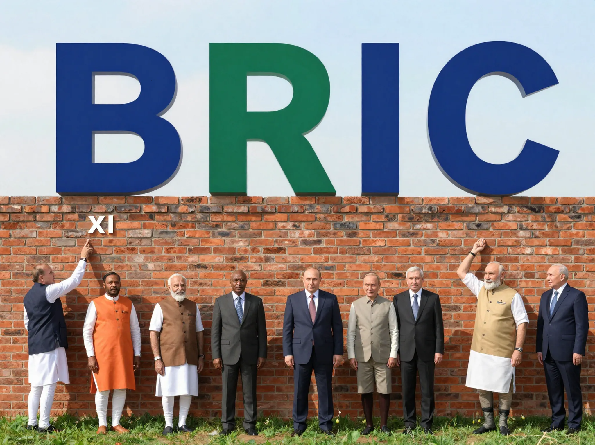
BRICS is an international organisation, currently comprising eleven countries: Brazil, China, Egypt, Ethiopia, India, Indonesia, Iran, Russia, Saudi Arabia, South Africa and the United Arab Emirates.
The founding members were Brazil, Russia, India and China, hence the original acronym BRIC. The inclusion of the latter two countries means that BRICS comprises more than a quarter of the global economy and nearly half the world’s population. As such, it has grown in stature and has become a major political power.
Russian inspired in 2009, but these days it is driven by China. BRICS was formed to counter the influence of Western powers and has sought to reshape the world order, reduce US influence and establish its leadership in technology, such as AI. It has also sought to reduce the dominance of the US dollar, by promoting greater trade settlement in national currencies.
The leaders of the BRICS nations recently met at their latest summit in New Delhi and, not surprisingly, were united in their opposition to ‘Trumpism’. This reflects their growing frustration with Trump’s protectionist policies from tariffs to sanctions. The summit provided an important opportunity for China’s President Xi Jinping to discuss issues such as the Gulf war ahead of his meeting with Trump later this week.
Is the latest BRICS summit likely to be a game changer?
No, but the image of XI, Modi and Putin smiling broadly and holding hands at the summit contrasts with political disarray in the West. Trump has made America more isolationist and he has questioned the NATO alliance. Trump has also riled key allies such as Canada, the UK and Europe. Meanwhile, within Europe, many governments are preoccupied with domestic problems such as immigration, the rise of populist parties and high levels of debt. Putin also remains a threat to Europe and his close ties to Xi Jinping are a concern.
What have we been watching?
The football season is well underway and last week it was a story of two halves for global equities. The first half saw a fresh spike in energy prices, renewed stagflation fears and the US 10-year Treasury yield closing above 5% for the first time since 2007. The second half saw the US Federal Reserve (Fed) deliver the first interest rate hike since 2023, which, together with some easing in energy prices, reversed the spike in global bond yields. This left risk assets broadly unchanged over the course of the week. Markets were also supported by optimism from US-China trade talks, ahead of the much-anticipated meeting between Trump and Xi Jinping later this week.
Brent oil surged to $109 earlier in the week as Houthi attacks on Saudi Arabian energy infrastructure intensified. However, Saudi Arabia said that the damaged East-West pipeline was expected to be back at half capacity within days and in full within six weeks. As we write this morning, Brent oil is 2% lower to just under $102.
Over the weekend, Trump announced that the US, Denmark and Greenland had reached an agreement that would allow a significant expansion of the US military presence on the island, with Trump describing the deal as giving the US ‘permanent control over security’ in Greenland. The deal recognises Greenland’s right to self-determination and Danish sovereignty. It falls well short of Trump’s earlier ambitions to acquire Greenland, but if the agreement holds, it removes a political hot potato for the US and NATO.

In the UK, the Bank of England (BoE) left interest rates on hold at 3.75% but said that policy ‘may need to tighten’ amid rising inflation forecasts. This appears to be preparing the ground for a 0.25% hike on the 5th of November, unless energy prices drop. Separately, and more significantly, the BoE announced it is pausing all government bond sales for six months. It has a new strategy regarding QT (Quantitative Tightening), which, allowing for the value of gilts to mature over the next year, will see the BoE reduce its gilt holdings by an average of £46bn a year until 2034, when it will have fully reversed QE (Quantitative Easing). This news, together with global bond yields receding slightly from their peak, saw the cost of UK government borrowing ease very slightly.

There were heavy defeats for the ruling CDU government in two German state elections with a surge in support for the far-right AfD in one and far-left Die Linke in the other. Chancellor Friedrich Merz called the results a ‘disaster’. The shock was that the CDU government didn’t even make the 5% threshold to enter parliament for the first time in the country’s post-World War II history. This will create huge amounts of pressure on the German Chancellor and raise questions about the reform agenda.

The Federal Reserve (Fed) delivered its first interest rate hike since 2023, whilst also signalling that it had started a modest tightening cycle. The Fed increased interest rates by 0.25% to 3.75%-4%, as expected, with the unanimous decision accompanied by a more-than- expected ‘hawkish’ shift in the Fed’s future interest rate ‘dot plot’ guidance. Comments by new Fed Chair Kevin Warsh described the hike as removing ‘a dose of accommodation’, whereas previously committee members had viewed policy stance as ‘mildly restrictive’. This left a clear sense that the Fed is at the start of a moderate tightening cycle rather than delivering a one-off hike. Markets therefore moved to fully price in another three possible rate hikes from the Fed by next summer.

The Japanese yen weakened 2% against the US Dollar last week. This followed a 0.25% interest rate hike by the Bank of Japan. However, this had been expected and the fact that two members of the committee voted against the hike was interpreted by markets in a ‘dovish’ light.
Finally, Brexit rumbles on! A summit between the UK and the EU has been delayed again as the two sides clash over Brussels’ new ‘Made in Europe’ policies. A meeting to reset post Brexit relations at the end of July was postponed and has now been further delayed until the end of November. Meanwhile, the UK has pushed back against EU demands for a ‘Farage clause’ requiring any future government that walked away from the reset deal to pay financial compensation to Brussels. Some EU diplomats are suggesting it may even pay the EU to delay any summit until after the next British election, which may not be until 2029!

1 The Square,
Temple Quay,
Bristol BS1 6DG
Tel: 0117 203 3460
Email: info @ alpha-pm.co.uk

Full version
© Alpha Portfolio Management 2026. All Rights Reserved
Site by Lookhappy