Alpha Portfolio Service Brochure
Dire Straits of America
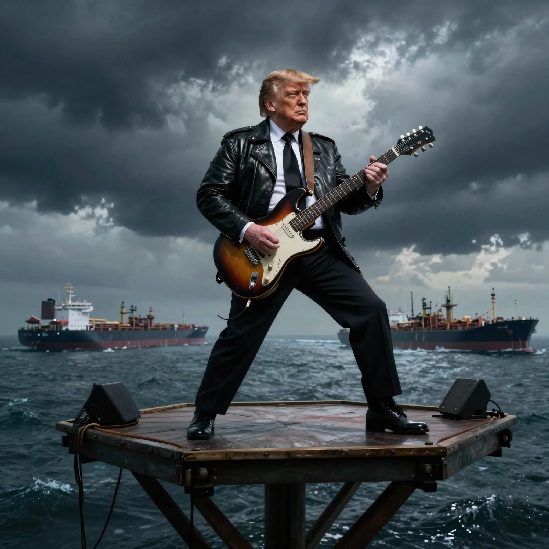
The conflict in the Gulf has left markets attempting to assess which countries are likely to face the biggest economic shock.
It appears that Europe and Asia will suffer a bigger blow than the US, which will be partly cushioned by its large domestic energy sector, it being the world’s largest oil producer. By contrast, Europe and Asia are reliant on energy imports, particularly gas.
Oil and gas prices have spiked on fears that the Strait of Hormuz will remain closed to ‘unfriendly’ tankers and that Iran will continue its attacks on the production facilities of neighbouring Gulf states. Higher commodity prices, if sustained, will drive up inflation, curb household spending power and weaken economic growth in countries across the world. Central banks may be forced to end their interest rate-cutting cycle or even tighten monetary policy. Some governments may also face extra fiscal strain if they seek to insulate households from higher energy bills.
Some analysts are now forecasting that the UK could see inflation hit 3%-4% by the end of 2026, compared with previous forecasts of 2%. Likewise, Eurozone inflation could increase by more than 0.5%. Not surprisingly, UK gilt yields have risen because of the uncertainty, which is bad news for the Chancellor trying to balance the books.
By contrast, US inflation may only rise by 0.2%. This is because over the last 20 years, the US has been transformed into the biggest producer of oil and gas in the world due to the shale revolution. This will partially shield US consumers, whereas European and Asian gas prices have spiked. In the US, the gas price has only inched up. A lack of export capacity will limit American producers’ ability to export gas and so keep a lid on US gas prices. However, US consumers will not be so protected in oil, where the market is more global. The oil price surge and higher US gasoline prices pose a risk for Trump and threaten to exacerbate the US affordability crisis ahead of the mid-term elections.
In Asia, China, India, Japan and South Korea are all big importers of oil and gas. China imports approaching 75% of its crude oil consumption from the Gulf and via the Strait of Hormuz and, despite sanctions, purchases 90% of all Iran’s oil exports.
Everything depends on the length of conflict in the Gulf and whether the US is able to either end Iran’s ability to attack neighbouring Gulf state oil facilities or make the Strait of Hormuz secure for oil and gas tankers. Markets still fear a prolonged conflict might push Brent oil back above the previous peaks seen in 2008 and 2022.
Meanwhile, Russia looks to be a big winner, having been given the chance to tighten its grip on the energy market at the expense of Gulf states that are unable to export their oil. A temporary relaxation of US oil sanctions is making Russia $150m a day in extra revenue from its oil sales. This is not good news for Ukraine or NATO.
The UK has North Sea oil and gas reserves, but on which topic PM Sir Keir Starmer has been strangely quiet. Perhaps he is looking over his shoulder at another of his leadership rivals, Ed Miliband, who continues to sing the praises of renewable energy?
What have we been watching?
Events in the Middle East continue to overshadow risk assets and as we write this morning, market turmoil is showing no sign of easing. At one point, Brent crude prices were up another 2% to $105, building on their rise of over 40% during the past two weeks. European gas prices were up 4% early this morning and are now up 74% over the past month.
The latest rise in Brent oil comes despite the release of a record amount of oil from the IEA strategic oil reserve. Up to 400m barrels of oil are to be released, which would be equivalent to between 20 and 25 days of lost oil production from the Gulf states. The latest spike follows US bombing raids on Iran’s Kharg Island, which is particularly significant because 90% of Iran’s crude oil exports are shipped from there. Trump said he had chosen not to destroy Kharg Island’s oil infrastructure but said he would consider it if Iran interfered with the passage of ships through the Strait of Hormuz. Meanwhile, Iran has continued to carry out missile and drone strikes on the oil and gas infrastructure of neighbouring Gulf states. Iran’s foreign affairs minister apologised to fellow Gulf states but was subsequently slapped down for doing so by members of Iran’s Revolutionary Guard.
The conflict in the Gulf now seems to be shifting to how the US opens the Strait of Hormuz with no vessels appearing to pass through it over the weekend. Trump is trying to co-ordinate an international response, although there appears to have been a mixed response so far. He has warned NATO it faces a ‘very bad future’ if it fails to assist and has said he could delay a summit with China’s Xi Jinping if China does not help unblock the Strait. Trump is also reported to have dispatched a US Marine expeditionary force to the Gulf, raising the prospect of some land-based attack.
Meanwhile, diplomatic efforts to end the conflict do not sound encouraging. Over the weekend, Trump said, ‘Iran wants to make a deal, and I don’t want to make it because the terms aren’t good enough yet.’ However, Iran’s foreign minister said, ‘We don’t see any reason why we should talk with Americans.’ Nevertheless, India’s foreign minister suggested that diplomacy may be one way to partially open the Strait of Hormuz. This followed news that Iran had agreed to allow two Indian-flagged gas tankers to pass through the Strait.
Aside from the conflict in the Gulf, markets will this week be watching central banks, with the Federal Reserve, European Central Bank, Bank of Japan and Bank of England all due to hold meetings. All of them have a very complex backdrop to deal with shaped by geopolitical risk, volatile energy prices and unclear inflation dynamics.
Finally, in a gold rush, always invest in picks and shovels! US private capital giant KKR is targeting a ten-fold return on a potential multibillion-dollar sale of a company that provides cooling equipment for datacentres. Nearly 3,000 datacentres are under construction or planned in the US, adding to the 4,000 existing sites. Cool IT Systems was set up in 2001 to produce cooling systems for gaming computers but then used this technology to support AI infrastructure. What a cool idea!

1 The Square,
Temple Quay,
Bristol BS1 6DG
Tel: 0117 203 3460
Email: info @ alpha-pm.co.uk

Full version
© Alpha Portfolio Management 2026. All Rights Reserved
Site by Lookhappy