Alpha Portfolio Service Brochure
Musk – Tap dancing through a minefield
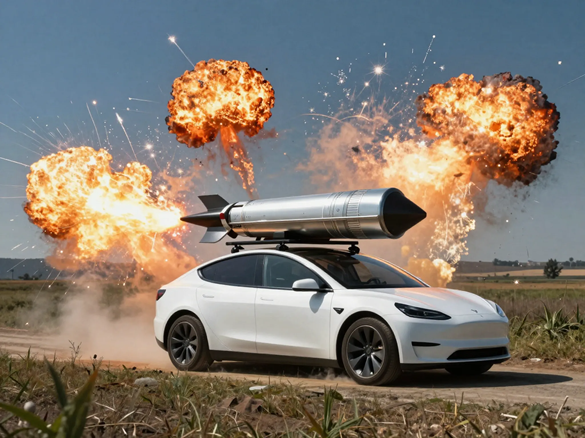
Elon Musk has stated he is actively considering merging Tesla and SpaceX.
In an earlier Alpha Bites ‘The rise and rise of the mega-cap US technology stocks,’ we highlighted the increasing concentration of global share indices in a handful of mega-cap US companies focused upon AI – including Elon Musk’s Space X.
Global indices would become even more polarised if the merger were to go ahead. Musk has already consolidated some of his smaller companies previously. Before SpaceX listed last year, it acquired xAI and X, the platform formerly known as Twitter, both of which he owned.
Assuming the merger is approved by shareholders and regulators, it would combine Tesla’s EVs, robots and self-driving technology with SpaceX’s rockets, datacentres, satellites and telecommunications operations.
The recent launch of Terafab, a combined effort to manufacture computer chips between Tesla and SpaceX is a good example of Musk’s ambition to have the two companies working more closely together. A bigger business also has more clout with banks and financiers. For example, SpaceX has just raised £40bn of debt to fund investment in GPUs (graphic processing units) at a time when Musk has warned many ‘neo-clouds’ (AI infrastructure providers) are struggling to do so and according to him, are going to ‘see a guppy-level death.’
Could the plan to merge the two companies also be an important step in helping to fulfil Musk’s ambitions to one-day build a self-sustaining city on Mars?
Musk became the world’s first paper trillionaire following the SpaceX listing and as Chief Executive of Tesla and SpaceX, he is a conflicted party. So, a merger would need to be overseen by a special committee. When asked if he thought a merger would be a good idea Musk replied ‘Yes’ but compared the possibility of combining the two companies to ‘tap dancing through a minefield.’
If the merger does go ahead at some stage, it would mark the largest such deal ever. Tesla has a value of about $1.5 trillion and SpaceX a value of $2 trillion. It would also lead to the combined entity dominating share indices and relative performance.
Elon Musk is a complex and divisive figure, often referred to as a “flawed genius”. However, could the future performance of global stock markets become even more tied to his longer-term dreams and ambitions?
What have we been watching?
Yet another AI wobble, Brent oil climbing to within touching distance of its 2026 high and the biggest crypto currency theft in history!
Brent oil climbed above $117 last week amid persistent concerns over a possible re-escalation between US and Iran following this week’s US midterm elections. However, this morning Brent oil has fallen back to just over $110 following three days of Iran-Qatar talks aimed at easing tensions in the region. US media also reports that Trump favours giving diplomacy longer to work. Meanwhile, European gas prices reached new highs, climbing to above €100/MWh for the first time since 2022.
There was continued volatility in the AI trade. A strong recovery earlier in the week gave way to a renewed sell-off that accelerated on Friday. The Philly Semiconductor index, which was up by 8% at one point last week, ended up posting its fourth consecutive weekly decline following a 7% slump on Friday. Underwhelming results from Alphabet and Samsung renewed doubts about the returns on AI capital spending.
Risk sentiment was also not helped by news of the biggest hack in history, with $6.3bn stolen from customers of crypto exchange Binance. Experts have identified North Korea as the probable culprit. This will be a wake-up call for all financial institutions, if ever one is needed, and should be prompting them to review their cybersecurity. Financial regulators around the world will no doubt be meeting with crypto exchanges to discuss their cybersecurity measures.

In the UK, Chancellor John Healy delivered his first budget. The key announcement for investors was that from April 2027, tax rates on savings and property will rise by a further 2% across all tax bands to 24% for basic rate, 44% for higher rate and 49% for additional rate taxpayers. Meanwhile, the bank tax increase was smaller than expected, increasing from 3% to 6% over the next fifteen months. From an economic perspective, the Chancellor said he would lower the UK’s fiscal headroom to £15bn in 2029-30 before it rises back to £22bn in 2030-31. The net impact of the budget was generally viewed as being marginal, with the Chancellor successfully buying himself more time as big questions remain regarding the UK’s long-term fiscal position. Following the budget the 10-year gilt yield dipped slightly to just over 5.3%.

In the US, the Federal Reserve (Fed) kept the funds rate at 3.75%-4%, as widely expected. Two Fed committee members voted in favour of a 0.25% hike. In the press conference, Fed Chair Kevin Warsh repeatedly returned to the theme of strong growth and noted that ‘while overall financial conditions are tighter, I am unable and unwilling to call them tight.’ Markets have been expecting three interest rate hikes over the next twelve months, but following the press conference, dialled back expectations. The chances of a December hike dropped from 91% to 84%, while those for next September eased to 71%. This saw the US Treasury curve steepen in response, with the US 10-year Treasury yield at one point touching 5%.
This week, the US will see the midterm elections which will determine control of Congress for the final two years of Trump’s term. Polling suggests the Democrats are likely to gain the three seats required for a House majority, but the Senate remains a much closer call. This will have ramifications for US government funding, which is due to expire on the 11th of December and Republicans are likely to seek a reconciliation bill that could include additional defence spending and potentially address the debt limit. Markets will also look to see what happens regarding the Iranian conflict.

Over the weekend, China’s official PMI business activity indicator delivered a noticeably weaker-than-expected start to the fourth quarter. The manufacturing PMI dropped into contraction territory with a reading of 49.3 in October.
Finally, a reminder of the importance to the global economy from the AI boom. The massive buildout of AI datacentres is thought to account for around half of planned global capital investment. The buildout is forecast to potentially treble demand for copper to between 2.5m-3m tonnes over the next two years. While markets are excited about the potential of AI, it is understandable, given the scale of investment, why many are also concerned.

1 The Square,
Temple Quay,
Bristol BS1 6DG
Tel: 0117 203 3460
Email: info @ alpha-pm.co.uk

Full version
© Alpha Portfolio Management 2026. All Rights Reserved
Site by Lookhappy