Alpha Portfolio Service Brochure
Silverado!
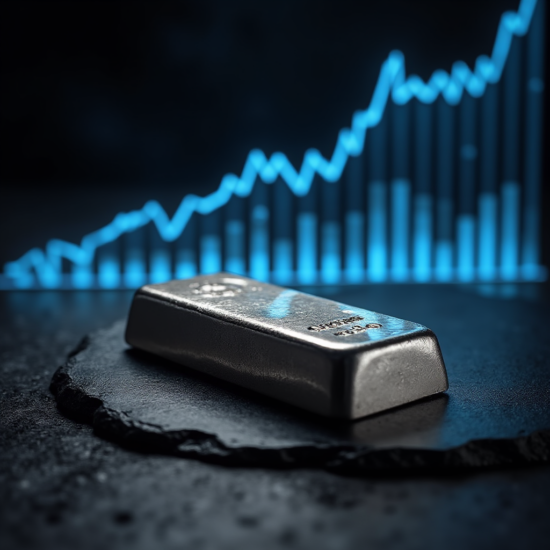
Gold has just surpassed $5,000 for the first time ever, partly due to geopolitical uncertainty following Trump’s tariff threat over Greenland. Even more notable however, has been the rise in the price of silver, which has already soared in value by over 50% so far this year!
Silver has the highest electrical conductivity among all metals and is therefore used in an increasing number of industries, particularly those involved in the transition to clean energy and AI, such as EVs, photovoltaic cells and semiconductors. Demand for silver solar panels is estimated to have grown by over 60% last year, surpassing the jewellery market as the biggest source of silver demand. This has contributed to the swing in the silver market into a supply deficit.
The recent squeeze in the silver price has also been due to China, which is believed to control around 13% of the world’s silver output. China is the joint second-largest silver producer alongside Peru, both of which are behind leading producer Mexico at about 24%. China has already introduced controls on key commodities such as rare earth minerals but loosened these at the end of 2025 following trade talks with the US. However, from the start of 2026, China has introduced new rules for domestic silver producers. Chinese companies must now secure government licences to export silver, with eligibility limited to state-approved firms producing at least 80 tonnes of silver a year and with $30m of credit facilities. This effectively blocks many small and mid-sized producers from exporting silver.
For now, the US and China have agreed to a trade truce, with China loosening controls on rare earth mineral exports while the US has eased restrictions on some AI chip exports to China. However, China’s tightening of export requirements on silver risks hitting global manufacturers in a number of sectors, from EVs and solar energy to electronics. This could drive up costs and adversely impact production. Tensions between the US and China in 2025 over trade, Taiwan and rare earth minerals have not gone away in 2026. China would also appear to be holding some ‘trump cards’ in any future trade negotiations with the US given its control of key ‘must have’ commodities such as silver and rare earth minerals.
What have we been watching?
Markets breathed a collective sigh of relief last week as Trump’s tariff threats against some European NATO allies were withdrawn. Sentiment improved after Trump said that he would not invade Greenland and he dropped the tariff threat after agreeing to a ‘framework of a future deal’ with NATO’s Secretary General Mark Rutte. However, markets drifted towards the end of last week as geopolitical concerns continued to cast a shadow and gold climbed above $5,000 for the first time ever as the US dollar continued to weaken.
Over the weekend, Trump threatened Canada with 100% tariffs if it agrees to a trade deal with China. The situation is complicated by the upcoming US Supreme Court ruling on Trump’s IEEPA tariffs, which might constrain his room for manoeuvre. However, no-one knows when this will be for sure, although the market expects this to be anytime from now until the end of June. Meanwhile, the risk of another USA government shutdown at the end of this month has also resurfaced. To add to the uncertainty, the New York branch of the Federal Reserve (Fed) is reported to have carried out a ‘rate check’ on the US Dollar/Japanese Yen on behalf of the US Treasury. The risk of possible intervention saw Japanese 30-year bond yields record their biggest daily increase since 1999, while the Japanese Yen, which had been drifting towards its weakest level since 2024, rebounded sharply.
The first three-way peace talks between Russia, Ukraine and the US ended in Abu Dhabi with no apparent breakthrough as Russia continues to bombard Ukrainian cities and energy infrastructure.

In the UK, Manchester Mayor Andy Burnham was blocked by Labour’s national executive committee from contesting the Gorton and Denton by-election. The UK bond market might be relieved, as he has previously said that the UK ‘needs to get beyond being in hock to the bond markets.’ However, while PM Sir Keir Starmer appears to have averted a potential leadership challenge for now, political uncertainty is likely to remain, and much could rest on the outcome of the by-election. These developments over the weekend overshadowed some more encouraging news for Chancellor Rachel Reeves, as UK government borrowing fell sharply last month as a higher tax take and National Insurance contributions outweighed public spending.

In the US, the risk of another government shutdown at the end of this month increased. Senate Democratic leader Chuck Schumer warned that the Democrats will block the latest spending package plan unless Republicans cut Homeland Security spending. This follows the latest tragic events in Minnesota over the weekend. Meanwhile, markets continue to focus on potential candidates to replace Fed Chair Jerome Powell when he retires later this year. Rick Reider appears to be the current favourite, and is considered to be more market friendly than the previous frontrunner, Kevin Warsh. Meanwhile, better than expected US weekly initial jobless claims data saw market expectations for two further US interest rate cuts by the end of 2026 continue to fade.

Brent oil edged up above $65 as a cold spell hit North America.
Finally, given Trump’s desire to own Greenland, what message does this send to the Kremlin and Beijing with their respective ambitions for Ukraine and Taiwan? What does this also mean for the NATO alliance? More alarmingly, is Trump losing the plot? In a message to Norway’s PM, Trump blamed the country for not awarding him the Nobel Peace Prize. In his reply, Norway’s PM had to explain that the peace prize is awarded by an independent committee and not the country!

1 The Square,
Temple Quay,
Bristol BS1 6DG
Tel: 0117 203 3460
Email: info @ alpha-pm.co.uk

Full version
© Alpha Portfolio Management 2026. All Rights Reserved
Site by Lookhappy