Alpha Portfolio Service Brochure
TACO – Does Trump always chicken out?
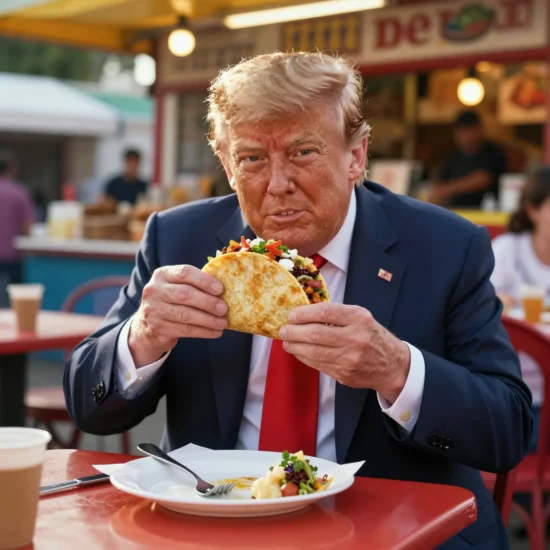
President Trump remains as unpredictable as ever, but his recent rantings and actions do give us even more reason for concern.
He has developed a very unwelcome habit of threatening tariffs as a means to bully other countries into political submission. He threatened eight European NATO allies with new tariffs if they did not support his claim to Greenland and has warned Canada it faces an astronomical 100% tariff if it does a trade deal with China! Trump has also threatened Iran, warning of military action unless it halts its nuclear ambitions and stops killing protesters. At least Washington and Tehran are now holding talks.
Trump is never one to miss out on claiming credit when things are going well. He recently stated, ‘America is back’, after US equities hit a fresh high. However, Trump is under pressure at home. His approval/disapproval rating amongst US voters over the handling of his job as US president has fallen to 41%-56% disapprove. US voters now blame Trump for higher prices rather than his predecessor. US betting sites currently show the probability of the Democrats gaining control of the House of Representatives in the 3rd November midterm elections at almost 78%. If this proves correct, then that would turn Trump into a ‘lame duck’ president, curtailing his ability to control in the final two years of his presidency.
While US equities have hit fresh highs, the US dollar has weakened. At least a major dollar crisis has been averted with Kevin Warsh nominated to replace Jerome Powell as Chair of the Federal Reserve. Markets hope that Trump will not hurt the global economy as much as he did in 2025 with his Liberation Day tariffs. Will Trump’s recent tariff antics strengthen the case of those that argue that he overstepped his legal powers last April? The US Supreme Court is still due to give its ruling on the validity of Trump’s IEEPA tariffs later this year.
Trump’s recent military intervention in Venezuela would suggest that TACO – Trump always chickens out – is not always the case. Trump is likely to continue to bully to force a path to negotiation, but in future, will he have to hold back more than before due to opposition within his own party?
For now, he remains a ‘loose cannon’, and investors should be prepared for ongoing market volatility courtesy of Trump’s Social Truth rants!
What have we been watching?
Yet another rollercoaster week for global equities! This time, the turbulence was sparked by a sharp sell-off in computer software companies driven in part by the launch of new artificial intelligence (AI) tools by US disruptor Anthropic. To add to market woes, earnings from Alphabet and Amazon added further pressure and the latter fell as investors became alarmed at the scale of its projected $200bn AI capex programme. As a result, the ‘Mag7’ US tech stocks had their worst week since last April, while the US computer software sector has now fallen in value by 15% over the last two weeks.
Commodities saw equally striking moves, with Brent oil falling on hopes of an agreement between the US and Iran. Silver dropped another 9% despite a strong rebound on Friday, while gold plunged to $4,400 before rallying to near $5,000. It was also a volatile week for cryptocurrencies and Bitcoin fell by 16% over the week, briefly trading at levels first crossed five years ago before recovering somewhat over the weekend.
Despite the volatility in software companies and commodities, the rest of the US equity market had a good week with the equal weighted S&P 500 index, which adjusts for the sheer scale of the Mag7, even hitting a fresh record high, while the old-fashioned concentrated Dow Jones index closed above 50,000 for the first time. It was also a positive week for European equities. Japanese equities also performed well and have surged to a record high this morning following PM Sanae Takaichi’s Liberal Democrat Party election victory.
President Trump signed an executive order threatening to impose additional tariffs, possibly as much as 25%, on countries that continue to trade with Iran. In recent weeks, Trump has threatened to bomb Iran. Against the backdrop of a US military buildup in the Middle East in response to Iran’s violent repression of nationwide anti-government protests, both the US and Iran have had initial talks. These have been described as a ‘good beginning’, but clearly an atmosphere of mistrust between the two sides needs to be overcome.
Ukrainian President Zelensky says the US wants the war with Russia to end by June, adding that both sides have been invited to the US for talks. Meanwhile, Russia has continued its attacks on Ukraine’s energy infrastructure, causing widespread blackouts during freezing conditions.

In the UK, the Bank of England (BoE) kept interest rates on hold at 3.75% but with a narrow 5-4 vote, with four members opting for a 0.25% cut. The accompanying BoE statement said that interest rates were ‘likely to be reduced further.’ However, this encouraging news has been more than countered by the latest political drama, with mounting speculation about PM Sir Keir Starmer’s position in the wake of the Peter Mandelson affair. Markets remain concerned by a potential vote of no confidence or leadership challenge that might see a shift to the left by the government with ramifications for UK borrowing, bond yields and Sterling.

In Europe, there wasn’t too much excitement from the latest meeting of the European Central Bank (ECB), which kept its deposit rate at 2% as expected. ECB President Christine Lagarde said that inflation was in a ‘good place’. Markets continue to see the ECB holding interest rates at this level for the remainder of the year.

In the US, growing expectations of interest rate cuts under a new Federal Reserve (Fed) Chair were reinforced by encouraging jobs opening data. Markets responded by increasing the size of cuts expected by the Fed’s December meeting to more than 0.5%.

Over the weekend, PM Sanae Takaichi achieved the largest election win for a single party in Japan in the post- World War II era. While a big victory was expected, the ‘super-majority’ has raised the prospect of even more aggressive economic policy and fiscal plans.

Brent oil drifted back from its recent high of $71 to just over $67 on hopes of an agreement between the US and Iran.
Finally, Trump promised to make the US the world’s cryptocurrency capital. A pro-cryptocurrency administration sent Bitcoin to a record price of $126,000. However, in recent months Bitcoin has fallen by more than 50% from its high and is now below the level it stood when Trump re-entered the White House. Trump has been surprisingly quiet on the issue.

1 The Square,
Temple Quay,
Bristol BS1 6DG
Tel: 0117 203 3460
Email: info @ alpha-pm.co.uk

Full version
© Alpha Portfolio Management 2026. All Rights Reserved
Site by Lookhappy