Alpha Portfolio Service Brochure
To EV or not EV…
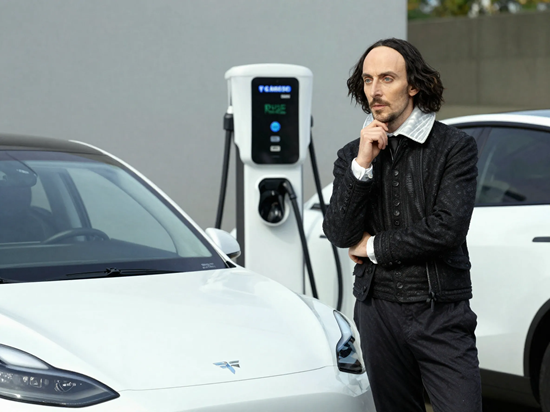
Trump’s Gulf war sent petrol and diesel prices soaring. This has prompted many vehicle owners to consider the merits of owning a battery-powered hybrid or electric vehicle (EV).
The latest UK car sales data confirms the increase in EV sales. In May, sales of EVs outsold new petrol cars for the first time. There are now more than ten Chinese manufacturers selling cars in the UK, with price being a key driver. A very competitive domestic market has forced Chinese EV manufacturers to seek new markets such as the UK. Chinese brands are rapidly increasing market share and now account for approximately 30% of all UK electric vehicle sales. Five years ago, the figure was just over 1%.
This comes as the government continues to court the Chinese EV manufacturers. The government’s message is that ‘Britain should not fear the rise of Chinese EV imports.’ One suspects that this is because it is hoping the Chinese will copy what Japan’s car industry did in the 1990s and invest in UK car production. Spain has been able to attract major Chinese factory investment – but has the UK been hampered by Brexit?
Meanwhile, the government has recently signed off on £380m of grant support for the new Agratas electric vehicle battery facility in Somerset that will go towards powering Jaguar Land Rover’s (JLR) EV fleet. Hopefully, this should keep the UK at the forefront of battery technology, and it means JLR will be able to keep exporting to the US with a made-in-the-UK battery. However, the government has announced a review of its previous 2030 ban on petrol cars as consumer demand for EVs is behind where it should be to meet the mandate. A consultation process is now underway.
For now, Chinese EV manufacturers seem to be content to invest more in car dealership networks and marketing across the UK to increase sales penetration. Unlike the US and EU, which have imposed tariffs on Chinese EVs, the UK has opted not to, citing consumer choice. There is no doubt the Chinese EV industry has received significant government support and has benefited from China’s stranglehold on rare earth minerals and economies of scale in battery technology.
One other factor that gives China’s manufacturers a major competitive advantage is its lower energy costs. While the UK government might welcome Chinese EV imports to hit its environmental targets, perhaps it is worth remembering that while China has invested heavily in solar and wind power, it still has over 1,100 coal-fired power stations operating, which account for over 50% of global coal electricity generation. Perhaps those Chinese EVs are not as environmentally friendly as first impression?
What have we been watching?
The US-Iran peace framework, hanging by a thread and global tech sell off!
Tensions in the Gulf continued to escalate last week with a series of tit-for-tat strikes around the Strait of Hormuz despite a fragile peace framework. This began with attacks on commercial shipping by Iran, prompting US strikes on Iranian-linked targets, while Iran responded with missile and drone strikes on US-linked sites in the Gulf, including bases in Bahrain and Kuwait. Meanwhile, Israel carried out air strikes against Hezbollah in Lebanon while Hezbollah rejected a US-brokered agreement with the Lebanese government.
However, while the threat level in the Strait of Hormuz has been raised to ‘substantial’ by the Joint Maritime Information Centre, overnight developments suggest a tentative de-escalation, with the US and Iran reportedly agreeing to halt further attacks ahead of renewed talks in Doha this week. This morning Brent oil has edged up slightly above $72 as traders continue to hope that the peace framework holds. However, difficult discussions remain ahead, particularly around control and potential costs for shipping transiting through the Strait of Hormuz while the situation in Lebanon between Israel and Hezbollah remains a concern.
Last week saw a global tech sell-off with ‘tech heavy’ indices such as South Korea suffering along with the US, where the ‘Mag 7’ entered correction territory following a fall in value of over 10% from its May peak. Japan also suffered as Softbank fell on news that Open AI might delay its listing until 2027. Apple fell after announcing its intention to raise the price of its Macs and iPads in response to a surge in demand for memory and storage (see our earlier Alpha Bites – Ram Raid). This has raised concerns that AI datacentre demand is generating inflationary pressures.
Global trade tensions also continue to rumble on. Trump threatened to impose 100% tariffs immediately on any European country that introduces a digital services tax on US technology such as Apple, Google, Meta and Amazon. Britain already has a 2% digital services tax in place, while France, Italy and Spain have a 3% digital services tax. Meanwhile, China added some 20 Japanese companies to an export control list that prohibits Chinese firms from selling dual-use products to those companies that might have military applications. This includes rare earth materials, batteries and semiconductor chip-making equipment.

In the UK, all eyes are upon new MP Andy Burnham. He is planning his ‘big speech’ today and is expected to re-commit to the fiscal rules with devolution as the main strategy for economic growth. Further details of the fiscal plans of the presumptive PM are expected over the coming days as nominations for the Labour leadership contest close on 9th July. Markets will be watching very closely to see who will be appointed as new Chancellor. Whether regional devolution can drive UK economic growth remains to be seen. Certainly, Andy Burnham has worked wonders for the Manchester area, but against this there is little evidence that a devolved Wales or Scotland has experienced higher growth than England.

In the US, PCE inflation data, the Federal Reserve’s (Fed) preferred inflation measure, was softer than expected in May and as a result, markets dialled back interest rate hike expectations. The scale of anticipated interest rate increases from the Fed by December has edged back from 0.4% to just over 0.3%.
Finally, an example of why the transition to renewables is not straightforward. Tata Steel has warned that its new £1.25bn electric steel-making furnace in Port Talbot could be delayed by eight months. This follows an announcement from National Grid that its connectivity project has been delayed. This involves the construction of two new substations, the installation of transformers, as well as laying 2 km of underground electrical cables. Quite a shock for this government-backed project to modernise steel production in South Wales.

1 The Square,
Temple Quay,
Bristol BS1 6DG
Tel: 0117 203 3460
Email: info @ alpha-pm.co.uk

Full version
© Alpha Portfolio Management 2026. All Rights Reserved
Site by Lookhappy