Alpha Portfolio Service Brochure
What role for the G20 in a divided world?
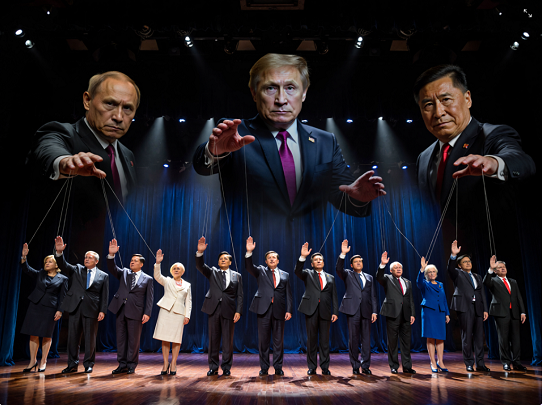
The G20 was formed in 1999 as a forum to remedy global economic crises, such as trade disputes and financial instability, but has since expanded to cover wider issues such as climate change and geo-political tensions.
The leaders of the most powerful countries in the world were high profile absentees from the recent G20 summit held in South Africa. President Trump boycotted and told the other countries not to sign a communique, whilst President Xi Jinping sent Premier Li Qiang to represent China. Russian President Putin would face arrest if he travelled to an ICC member state, so wisely declined to attend. However, the G20 struck a defiant note with South Africa’s President noting the isolationist stance of Trump and his self-imposed exile from multinational bodies that America once championed.
Interestingly, the US is due to host the next G20 in 2026. It is expected the summit will be held at Trump’s golf course in Miami Florida. Currently, Trump has stated that South Africa will be barred from the event!
While Trump has become more isolationist and divisive, China has been working to break the dominance of the US dollar and undermine America’s influence. While China’s renminbi is unlikely to take the place of the US dollar in the global financial system, it is nonetheless boosting its involvement in international trade and investment rapidly, albeit from a small base.
However, China’s capital controls have hindered the renminbi’s international appeal. According to the IMF, the renminbi accounted for just over 2% of official reserves at the start of 2025. Beijing is now moving to address this and is planning to make Hong Kong a hub for fixed income and currency trading. Simultaneously, China has opened its domestic interbank repo market to renminbi fixed income assets as collateral for renminbi loans. Ultimately, these moves should accelerate the renminbi as a funding currency.
This is not a seismic shift but is clearly another significant step towards China’s goal of de-dollarisation and aim to benefit from Trump’s isolationist policies. As we have said on many an occasion in Alpha Bites, the long-term struggle between the two most powerful economies in the world continues day-to-day on many different levels.
Meanwhile, tensions between the US and China along with divisions over an agreed solution to end the conflict in Ukraine are undermining the G20’s cohesion and message of international cooperation.
What have we been watching?
Markets were quieter ahead of this week’s Federal Reserve (Fed) meeting which is expected to see a 0.25% interest rate cut. However, bond investors appeared, once again to be concerned about the future independence of the Fed. Meanwhile, markets are waiting for a backlog of US economic data releases due to the earlier US government shutdown.
The AI investment bubble debate continues. In the latest news, Microsoft’s shares dropped slightly following reports that the company had lowered its AI software sales teams quotas although this was denied by a Microsoft spokesperson.
The OECD published its latest economic outlook report. It expects leading economies will halt their interest rate cutting cycles by the end of 2026 as most major central banks have little scope for looser policy. The OECD expects the Fed to make two more interest rate cuts of 0.25% in 2026, taking the federal funds rate to 3.25%-3.5%. In the UK, the OECD expects rate cuts to end in the first half of 2026 but, it expects no more cuts in the Eurozone by the ECB. Japan is likely to see a steady tightening of monetary policy. As for global economic growth, the shock of Trump’s tariffs has been less than feared and the OECD now forecasts 2.9% growth in 2026 and 3.1% in 2027. This is partly due to the surge in AI-related investment in the US and Asia.
Bond investors have warned the US Treasury about Kevin Hassett’s potential appointment as new Fed Chair in May 2026 amid fears that he would cut interest rates aggressively to please Donald Trump. The US President said that he planned to name his pick for Fed Chair ‘early’ next year and signalled Hassett was a ‘potential’ contender. The doubts about Hassett reflect broader anxiety about the transition at the Fed.
Trump’s envoy Steve Witkoff met Putin in Moscow to discuss the US peace plan. Putin’s chief foreign policy advisor said that talks were ‘constructive and very informative’ but that a ‘compromise hasn’t been reached yet’ on territorial questions and that talks would continue. Putin does not appear ready to sign a peace deal, wants the entire Donbas and believes Russia holds the initiative on the battlefield. Over the weekend Trump claimed Ukrainian negotiators ‘love’ the latest American peace plan but then added ‘I am a bit disappointed that President Zelensky hasn’t yet read the proposal.’ Meanwhile, the EU has proposed a legally contentious workaround to raise up to €210bn for Ukraine backed by frozen Russian state assets, including emergency powers that in effect strip dissenting countries such as Hungary of their veto. The EU has also agreed, albeit four years after Russia’s invasion of Ukraine, to a full ban on Russian gas imports by Autumn 2027!

Eurozone inflation rose unexpectedly to 2.2% in November ahead of the ECB’s 2% target for the third month in a row as service sector prices continued to creep up. The ECB is expected to keep interest rates on hold at its next meeting in December and markets currently only see a 30% chance of another 0.25% interest rate cut by June 2026.

Japanese bond yields edged higher as markets anticipate the Bank of Japan (BoJ)-raising interest rates at its next meeting providing there is no major shock to the economy or financial markets in the meantime. If the BoJ does increase rates by 0.25% to 0.75% then this would be the highest level since 1995.

China appears to be loosening its control over the exports of rare earth minerals following the earlier meeting between Trump and Xi Jinping but only up to a certain point. Some European businesses report that they have only been allowed to import sufficient quantities to meet current needs and not enough to build stockpiles in case of future restrictions. In addition, the Chinese Ministry of Commerce has confirmed that it will issue export authorisation but only for use in civilian applications thereby creating a challenge for the US defence industry.

Brent oil remained around $63 as OPEC+ confirmed it is suspending monthly production increases in the first quarter of 2026 due to weakening oil demand.
Finally, global management consultancy firm Accenture is to start calling its nearly 800,000 employees ‘reinventors’ as it adapts to AI and customers using the technology. Other well-known American firms have already re-labelled their workers including Disney’s ‘imagineers’ and Amazon’s ‘ninja coders.’ We can assure you that Alpha has no such plans and that my title will not be changing to ‘crystal ball gazer.’

1 The Square,
Temple Quay,
Bristol BS1 6DG
Tel: 0117 203 3460
Email: info @ alpha-pm.co.uk

Full version
© Alpha Portfolio Management 2026. All Rights Reserved
Site by Lookhappy